Irish Elk
| Statistic | Value |
|---|---|
| Size/Type | Large Animal |
| Hit Dice | 5d8+20 (43 hp) |
| Initiative | +1 |
| Speed | 50 ft. (10 squares) |
| Armor Class | 15 (-1 size, +1 Dex, +5 natural), touch 10, flat-footed 14 |
| Base Attack/Grapple | +3/+14 |
| Attack | Gore +9 melee (2d6+10) |
| Full Attack | Gore +9 melee (2d6+10) |
| Space/Reach | 10 ft./5 ft. |
| Special Attacks | ― |
| Special Qualities | Low-light vision, scent |
| Saves | Fort +8, Ref +5, Will +2 |
| Abilities | Str 24, Dex 13, Con 19, Int 2, Wis 12, Cha 10 |
| Skills | Listen +7, Spot +7 |
| Feats | Alertness, Endurance, Improved Natural AttackB (gore) |
| Environment | Cold plains |
| Organization | Solitary, pair, or herd (5–20) |
| Challenge Rating | 4 |
| Advancement | 6–9 HD (Large) |
| Level Adjustment | ― |
Description
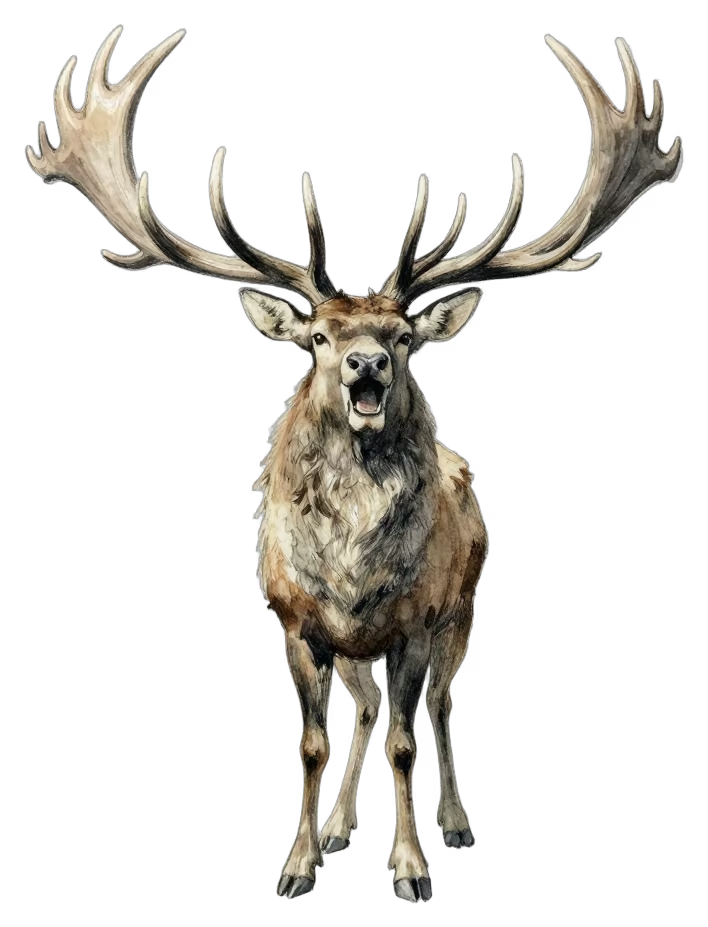
This giant deer stood 6 ft. at the shoulders and possessed a massive rack of antlers that spanned over 9 ft. Megaloceros were browsing animals inhabiting woodland areas, with long legs that were ideal for running long distances quickly.
While the huge antlers undoubtedly presented an intimidating threat to any predators, they evolved primarily for the purpose of gender display. The great weight of the horns was a burden for the megaloceros, and it required a strong, healthy frame to raise the head after taking a drink. The irish elk appeared several million years ago, and only became extinct with the arrival of man about 11,000 years ago. It ranged across Europe, Asia, and northern Africa.
Combat
The irish elk attacks by lowering its massive rack and goring its foes.