Stegosaurus
| Statistic | Value |
|---|---|
| Size/Type | Huge Animal |
| Hit Dice | 11d8+72 (121 hp) |
| Initiative | +0 |
| Speed | 20 ft. (4 squares) |
| Armor Class | 16 (-2 size, +8 natural), touch 8, flat-footed 16 |
| Base Attack/Grapple | +8/+24 |
| Attack | Tail attack +14 melee (2d6+12/19–20) |
| Full Attack | Tail attack +14 melee (2d6+12/19–20) |
| Space/Reach | 15 ft./10 ft. |
| Special Attacks | Trample 2d12+12 |
| Special Qualities | Low-light vision, scent |
| Saves | Fort +15, Ref +7, Will +3 |
| Abilities | Str 27, Dex 10, Con 23, Int 1, Wis 10, Cha 7 |
| Skills | Listen +9, Spot +9 |
| Feats | Alertness, Great Fortitude, Improved Criticalb (tail), Toughness (2) |
| Environment | Warm forest |
| Organization | Solitary, pair, or herd (7–16) |
| Challenge Rating | 7 |
| Treasure | None |
| Alignment | Always neutral |
| Advancement | 12–22 HD (Huge); 23–33 HD (Gargantuan) |
| Level Adjustment | ― |
Description
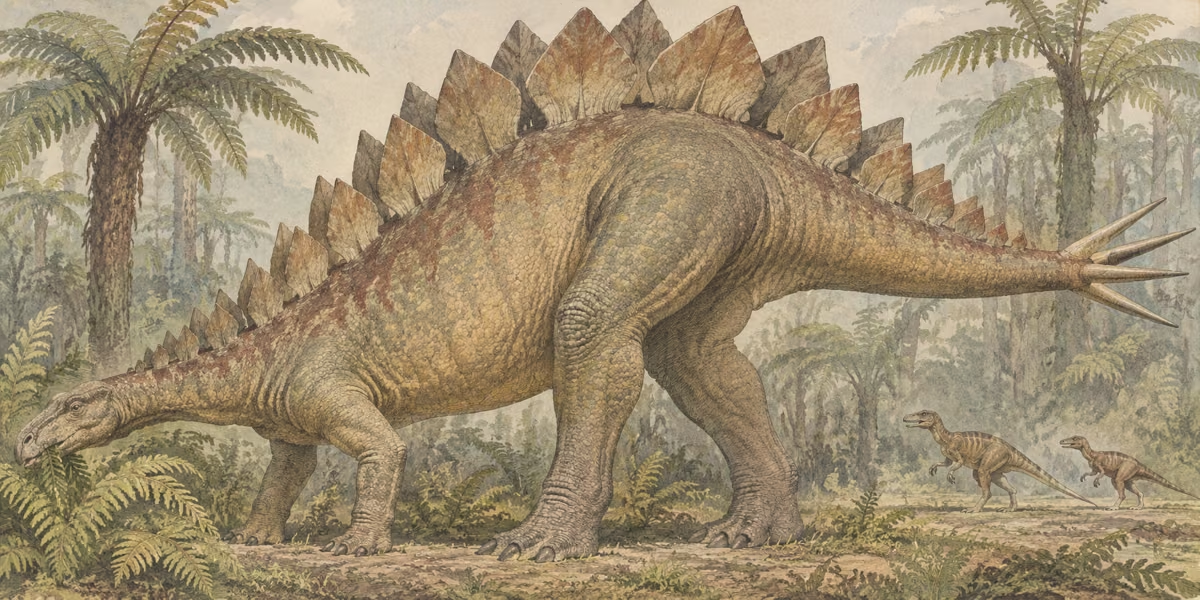
A great four-legged beast with a relatively small head looks up with a tuft of foliage trapped between its jaws. Two rows of large, diamond-shaped plates project out along its back, and the tail is equipped with a set of formidable spikes. The body increases in size toward the back, which peaks at the massive hind legs.
This herbivore can weigh more than two tons and exceed 30 feet in length. Plates of thin armor guard especially vulnerable areas such as the hips and throat. Its most distinctive features are the tall, triangular plates on its back and the deadly spines at the end of its tail.
Stegosaurs like soft foods like the fruits and fleshy leaves of a lush forest. However, they may be found in more open areas if water is available.
Combat
Stegasaurs are irritable and begin lashing their tails menacingly at any perceived threat. Their brains are notoriously small and a spooked or confused stegasaur may trample smaller creatures recklessly.
Trample (Ex): Reflex half DC 23. The save DC is Strength-based.
Also in this section of the source
Dire Animal
Dire animals are larger, tougher, meaner versions of ordinary animals. Each kind tends to have a feral, prehistoric, or even demonic appearance.